
Breast cancer: how modern surgery helps preserve the breast
Hearing the diagnosis of "breast cancer", many women are primarily afraid of losing a breast. Today, this is by no means always necessary. If the disease is detected early, in most patients the tumor can be removed while preserving the breast itself and its shape. At the same time, the treatment results are not worse, and even better than with complete removal of the gland, because the patient's quality of life improves.
But today we are happy to announce in our clinic Nanj Medical we perform this kind of minimally invasive and reconstructive-plastic operations even at stage 3 of the disease , only with complete resorption or reduction of the tumor by more than 80%.
Why is early diagnosis so important?
The smaller the tumor, the smaller the operation and the higher the chance of preserving the breast. If you notice such changes, do not delay a visit to an oncomammologist:
• a node or lump in the breast or armpit;
• change in breast shape, skin dimpling;
• nipple retraction or discharge from it, especially bloody.
Women over 40 are recommended to regularly undergo mammography as prescribed by a doctor.
How is a treatment plan drawn up?
Before surgery, a complete examination is carried out: mammography, ultrasound, if necessary MRI and biopsy — taking a small sample of tumor tissue. Biopsy gives us the morphology and biological subtype of the tumor. Based on these results, the oncosurgeon, chemotherapist and radiotherapist together draw up a treatment plan and decide whether to start with surgery or with drug therapy. In a number of cases we carry out gentle treatment with hormones and targeted drugs, which does not cause hair loss .
Types of operations
• Sectoral resection — the tumor is removed together with the surrounding healthy tissue, the breast is preserved. The most common method at an early stage. Today we perform this type of operation using a laser and a minimally invasive approach.
• Oncoplasty resection — after removing the tumor, the gland tissue is remodeled anew. If necessary, symmetry is restored on the second breast as well, so that both look identical. Lymph dissection is performed through a separate minimally invasive approach .
Subcutaneous mastectomy with simultaneous breast reconstruction using an implant , if necessary a symmetrizing operation on the opposite breast.
• Mastectomy — the mammary gland is completely removed. It is performed if the tumor is large, there are several foci in the gland, or organ-preserving surgery is impossible for other reasons. As a second stage, delayed breast reconstruction can be performed.
• Extended radical mastectomy — performed in complex cases when the disease has spread wider.
During many operations, axillary , subclavian, subscapular lymph nodes are also examined and removed (lymph dissection). This is important for planning further postoperative treatment.
After surgery
• After organ-preserving surgery, radiation therapy is usually prescribed: it reduces the risk of disease recurrence.
• Depending on the spread of the tumor, chemotherapy, hormone or targeted therapy may be added.
• After lymph dissection it is necessary to wear a special sleeve and perform exercises shown by the doctor, as well as follow their recommendations for arm care. This reduces the risk of arm swelling (lymphedema).
• After completing treatment it is necessary to regularly undergo control examinations within the timeframe prescribed by the doctor.
Postoperative observation is the most important stage in a patient's life, because regular check-ups with the attending physician contribute to longevity , recovery and improved quality of life.
About the author
Alimkhodjayeva Lola Telmanovna — professor, oncomammologist, chief oncomammologist of the Republic of Uzbekistan. Member of the European Society for Medical Oncology ESMO. Treats breast diseases, both benign – mastopathies and malignant - breast cancer . Is fluent in all types of reconstructive and plastic breast surgery. Performs single- and two-stage operations. , as well as complex operations requiring special knowledge and skills.
Make an appointment: 55 500 05 50
Breast cancer: how modern surgery helps preserve the breast
Read next
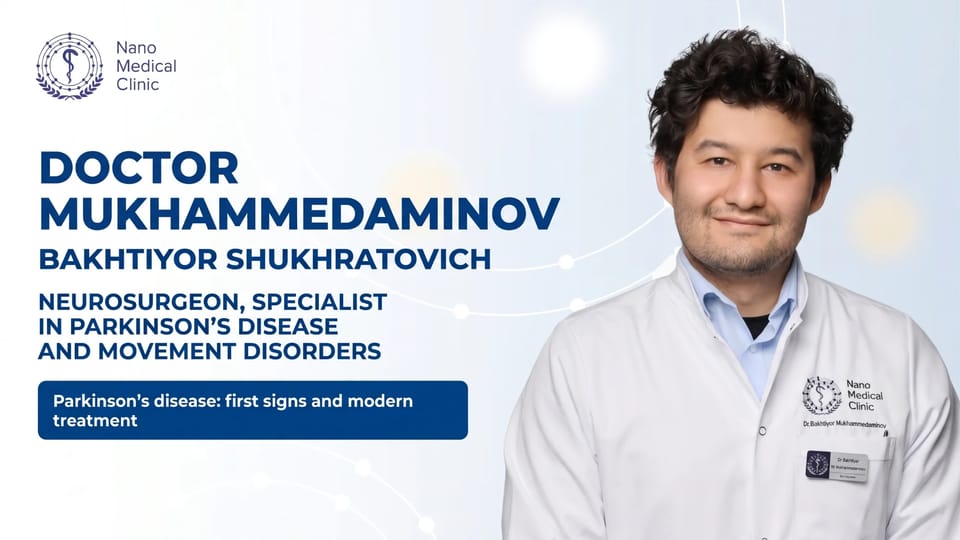
Parkinson's disease: early signs and modern treatment
Parkinson's disease is a condition in which brain cells that produce dopamine, necessary for controlling movement, gradually die…
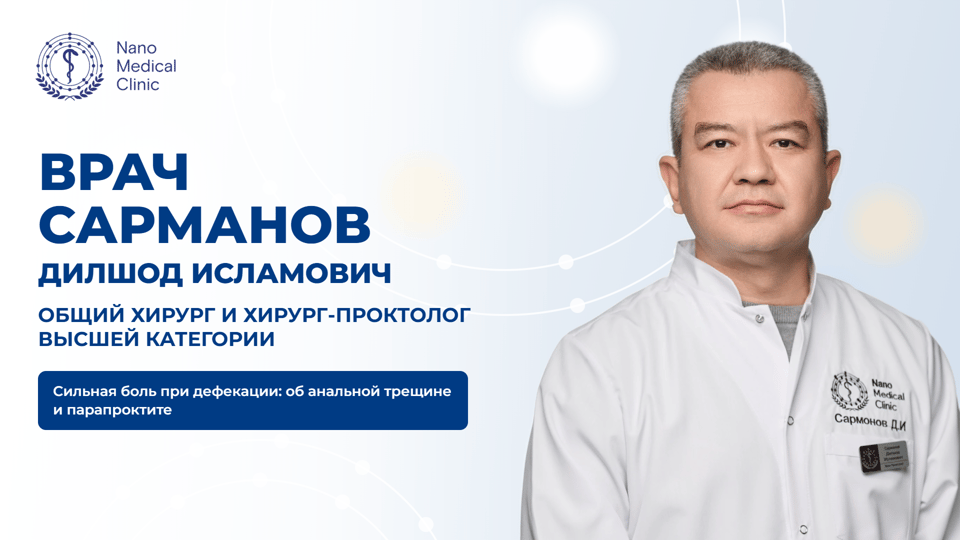
Severe pain during defecation: about anal fissure and paraproctitis
Pain in the anal area is very distressing, but many people are embarrassed to talk about it. The two most common causes of such…
How to Prepare for an Ultrasound?
Ultrasound examination (USG) is a safe, painless, and quick way to examine internal organs. It involves no radiation, so it is…